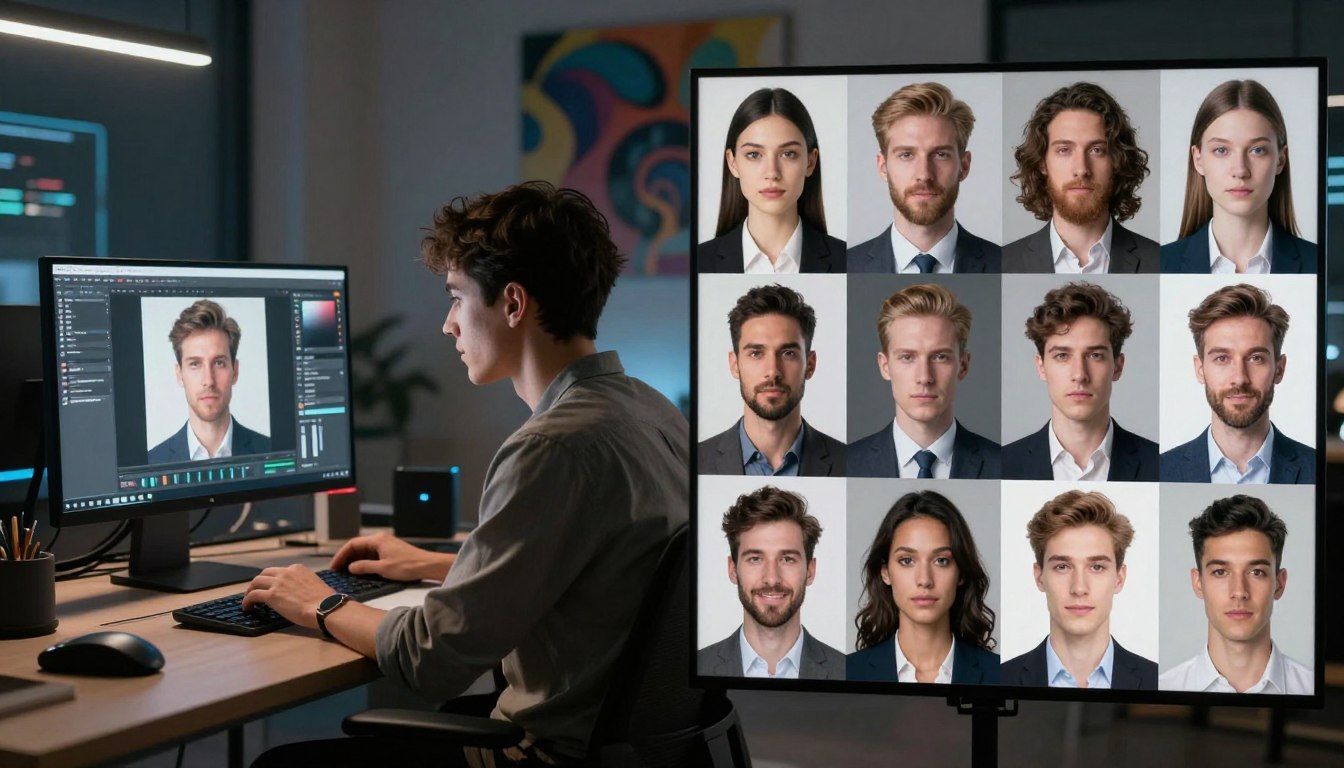
Could a single, easy-to-use tool change creativity — and harm — at the same time?
BestFaceSwap.ai markets an automated service that can place someone’s appearance into photos and videos with a few clicks. That capability promises fast, customizable fun for consenting adults and quick testing for creators.
But the same engine also made nonconsensual celebrity deepfakes headline news, raising sharp questions about consent, safety, and law in the United States. This article looks at the tension between creative use and misuse.
We tested photo and video results, noted what good outputs look like, and listed common failure modes. The review covers quality, speed, upload limits, pricing, and trial options, and it previews legal and ethical concerns that buyers should know.
Read on for practical tips: how to judge any tool, reduce poor results, and avoid unsafe or illegal uses while keeping consent and rights front and center.
Key Takeaways
- Know the trade-offs: convenience can enable harm if you ignore consent.
- We tested photos and videos to compare quality, speed, and limits.
- Watch for telltale failures that reveal fake composites.
- Pricing, upload caps, and free trials matter for buyers with commercial intent.
- U.S. law and platform rules offer some protection, but gaps remain.
What This Tool Promises: AI Face Swapping for Photos and Video
A new crop of consumer tools promises editing that once required hours and specialized skill. BestFaceSwap.ai centers its pitch on moving images, claiming better results for complex 18+ scenes than older, photo-only apps.
How modern systems work, in plain English
The system studies a source portrait, learns key features, and maps those features onto a target across an image or frame sequence. That mapping keeps expressions and lighting consistent so the output looks natural at normal viewing size.
Why video is the real selling point
Every frame is a fresh challenge: motion, occlusion, and changing light can break continuity. Good video face swapping shines when clips stay stable and artifacts are rare.
What “optimized for 18+ complex scenes” means
“Optimized for complex scenes” signals tuning for tricky poses, partial occlusion, and fast motion.
In practice, expect decent believability, consistent frames, and low flicker—but you still need clean source images and steady video to meet those promises.
- Practical tip: higher-resolution inputs improve final results and save rework.
BestFaceSwap.ai Review: Features, Workflow, and User Experience
BestFaceSwap.ai trims the learning curve, turning a once-technical process into a few straightforward clicks. The interface walks a buyer through the end-to-end workflow in plain steps so even new users get reliable results quickly.
How it works for a typical session:
- Pick a target photo or video from your device.
- Upload one or more source images of the person to place.
- Select the desired source from the menu and run the swap.
Upload limits and file-format notes
Photos are accepted up to 10MB. Videos allow up to 500MB or 10 minutes — limits that matter for real-world clips.
Reviewers hit a persistent “unknown file extension” error when uploading JPEG target images. Converting those target files to PNG cleared the issue, while source JPEGs were accepted. That PNG workaround is simple but worth noting before you pay credits.
Speed, retention, and buyer value
Processing is fast. A 15-second clip rendered in about a minute during testing, versus the old desktop era of 8–12 hours.
Gallery retention is a practical advantage: outputs are saved to a user gallery instead of being auto-deleted by competitors. That reduces accidental loss and supports repeat edits.
| Feature | Limit / Behavior | Buyer Impact |
|---|---|---|
| Photo uploads | Up to 10MB | Works for most still images; large RAWs need downsizing |
| Video uploads | Up to 500MB / 10 minutes | Good for standard clips; long shoots require trimming |
| File format quirks | JPEG targets may error; PNG workaround | Minor friction, easy fix before processing |
| Processing time | Minutes (≈1 min for 15s) | Fast turnaround; supports quick revisions |
| Content retention | Saved gallery | Less risk of lost outputs and easier reuse |
Real-World Results: Photo Swaps, Video Swaps, and Quality Checks
Practical testing reveals that still images often pass as real, while motion remains the harder test.
Photo results were often highly realistic. In at least one test the image avoided the common “chimera” blend and read as the intended person at a glance.
Use this quick quality checklist for image edits:
- Correct facial proportions
- Natural skin blending
- Consistent lighting
- No vague, cousin-like composite
Video results are convincing overall but show light artifacts during head turns. A 15-second clip processed in about a minute and generally held together.
Most giveaways appear when the subject moves. Pixels can “hunt” at edges, producing brief glitches that mimic low-bitrate streaming more than clear fakery.
Scene choice and multiple-subject shots matter. Better lighting, fewer occlusions, and higher resolution improve stability. Swapping multiple faces in one scene raises complexity and can drop accuracy unless tracking is strong.
For quick previews, a gif face swap or video gif can help, but compression may exaggerate banding. In review terms, truly fapworthy results stay believable through the whole clip, avoid flicker, and keep facial drift to a minimum.
Pricing, Credits, and Value vs Alternatives
Before you buy, run the numbers — credits, membership, and per-clip burn decide actual value.
Credit math made simple: photos cost 0.5 credit each. Video costs 5 credits per 15 seconds. That means a single credit buys two still edits or three seconds of video output.
What $10 gets you
The membership is $10/month for 100 credits and no confusing tiers. At that rate, a subscriber can create up to 20 photos or 300 seconds (5 minutes) of rendered video per month.
Buying friction: no free trial
There is no free trial at launch. Attempting to upload without credits can show an “insufficient credits” message. That forces buyers to decide from reviews and sample clips rather than a risk-free test.
Market value and responsible use
Compared with creator platforms, this model lowers the barrier to low-cost custom content. It can feel cheaper than commissioning a real clip on subscription sites.
Responsible-consumer note: lower price does not remove consent obligations. Cheap generation raises the stakes for users to verify permission and ownership.

| Item | Cost (credits) | Practical output per $10 plan |
|---|---|---|
| Photo edit | 0.5 credit | 20 photos for 100 credits |
| Video (15 sec) | 5 credits | 20 clips of 15s = 5 minutes total |
| Per-credit equivalent | — | 1 credit = 3 seconds of video or 2 photos |
- Compare competitors for watermarking, output resolution, and gallery retention.
- Watch video credit burn rates—longer clips multiply cost fast.
- Value is clear for low-cost custom content, but not a substitute for paid creator work.
Is face swap porn ai Unethical or Illegal? Consent, Safety, and US Reality
What began as a novelty editing trick now risks making fake explicit clips of real people at scale.
Why this became a major problem
Ethically combustible content can manufacture realistic-looking NSFW clips of people who never consented. Early high-profile targets—Daisy Ridley, Gal Gadot, Scarlett Johansson, and Taylor Swift—made the issue visible and normalized imitation by copycats.
US legal gaps and defenses
Many U.S. laws treat nonconsensual explicit material as a privacy harm. Deepfake cases slip through because the nude body may not be the real person’s body. Creators can invoke First Amendment or parody defenses, which complicates enforcement.
What recourse exists
- Misappropriation/right of publicity: strongest for celebrities used commercially.
- Defamation claims exist but are often hard to win.
- Platform takedowns and search delisting remain the most practical remedy.
Responsible-use rules and detection
Do not upload anyone’s image without explicit, informed consent. Only use source content you own. Never create or share material involving minors or nonconsensual NSFW content.
Platforms can pair basic porn detection with edited-video detectors and tool-signature checks to limit spread. Better results from these safety measures make responsible use the baseline for anyone testing such tools.
Conclusion
BestFaceSwap.ai delivers rapid, high-quality video edits that suit creators who need speed and a simple workflow.
Pros include a clear interface, generous 500MB / 10-minute limits, fast turnaround, and a saved gallery so outputs are not lost.
Cons include no free trial at launch and occasional JPEG upload friction that requires converting to PNG before use.
This product is best for users who want quick video swaps and accept a $10/month credit plan. Skip it if you need a free test, seamless JPEG compatibility, or builtin compliance tooling.
Final note: any face swap must be done only with explicit consent and legal rights. Treat permission as the nonnegotiable price of admission.